
The A in PEAR: The Actions that Affect Daily Operations
In previous articles, we have addressed the people who do the job, and the environment in which they work. But what about the work itself?
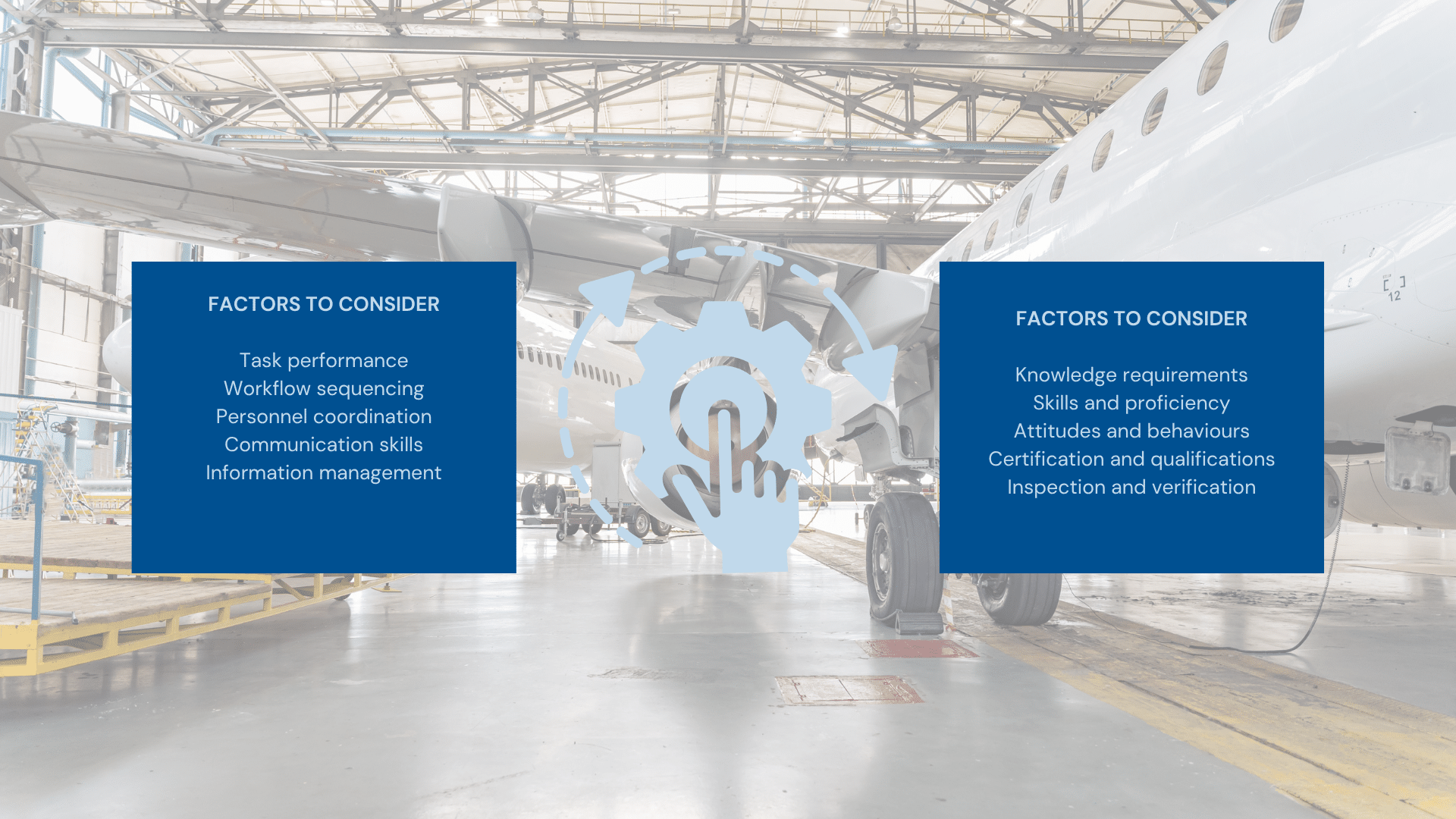
The A in PEAR stands for Action and exemplifies all the actions people perform to complete their job. Every inspection, troubleshooting task, and ticked box on a checklist must be completed with safety and efficiency in mind. Yet every action is influenced by workload, pressure, communication culture, and the experience and competence of the people performing them.
That is why it is important for organisations to identify the knowledge, skills, and attitudes necessary to perform a certain task. In that respect, individual assessments and human factors training programmes are essential tools.
Operational Reality under the Magnifying Glass
Procedures constitute the foundation of daily work.
They standardise tasks, define areas of responsibility, and help ensure that maintenance tasks are performed consistently and to an approved standard. In most situations, procedures function exactly as intended.
But procedures are written for predictable situations. The problem with that is that daily operations are not always predictable. Sometimes, reality calls for different actions.
For that reason, maintenance staff must be trained not only to follow procedures, but also to apply their knowledge, skills, and experience to adapt to operational conditions.
KSA: A Competency Triad
So, how can organisations build and maintain a workforce with the competence to perform actions safely and efficiently? Especially when procedures no longer provide a clear pathway.
When it comes to actions in the maintenance environment, KSA plays a vital role. KSA is an acronym for Knowledge, Skills, and Attitude and emphasises the need for people to possess the knowledge, practical skills, and professional attitude required to understand a task, perform it correctly, and work effectively with others – even under pressure.
In aviation, the actions performed cannot be isolated from the operational and organisational environment. In fact, every action reflects the conditions under which people must perform: workload, interruptions, time pressure, team dynamics, and level of competence.
In these situations, KSA provides the foundation for adapting safely to changing conditions without compromising the actions that take place.
The true test of competence is not whether people can follow a procedure, but whether their knowledge, skills, and attitude enable them to maintain safe performance when the procedure no longer provides all the answers.
Source of inspiration: Johnson, W. B. & Maddox, M. E. (2007). A Model to Explain Human Factors in Aviation Maintenance. SKYbrary Aviation Safety. Retrieved from: https://skybrary.aero/sites/default/files/bookshelf/1482.pdf