
The E in PEAR: The Environmental Side of Safety
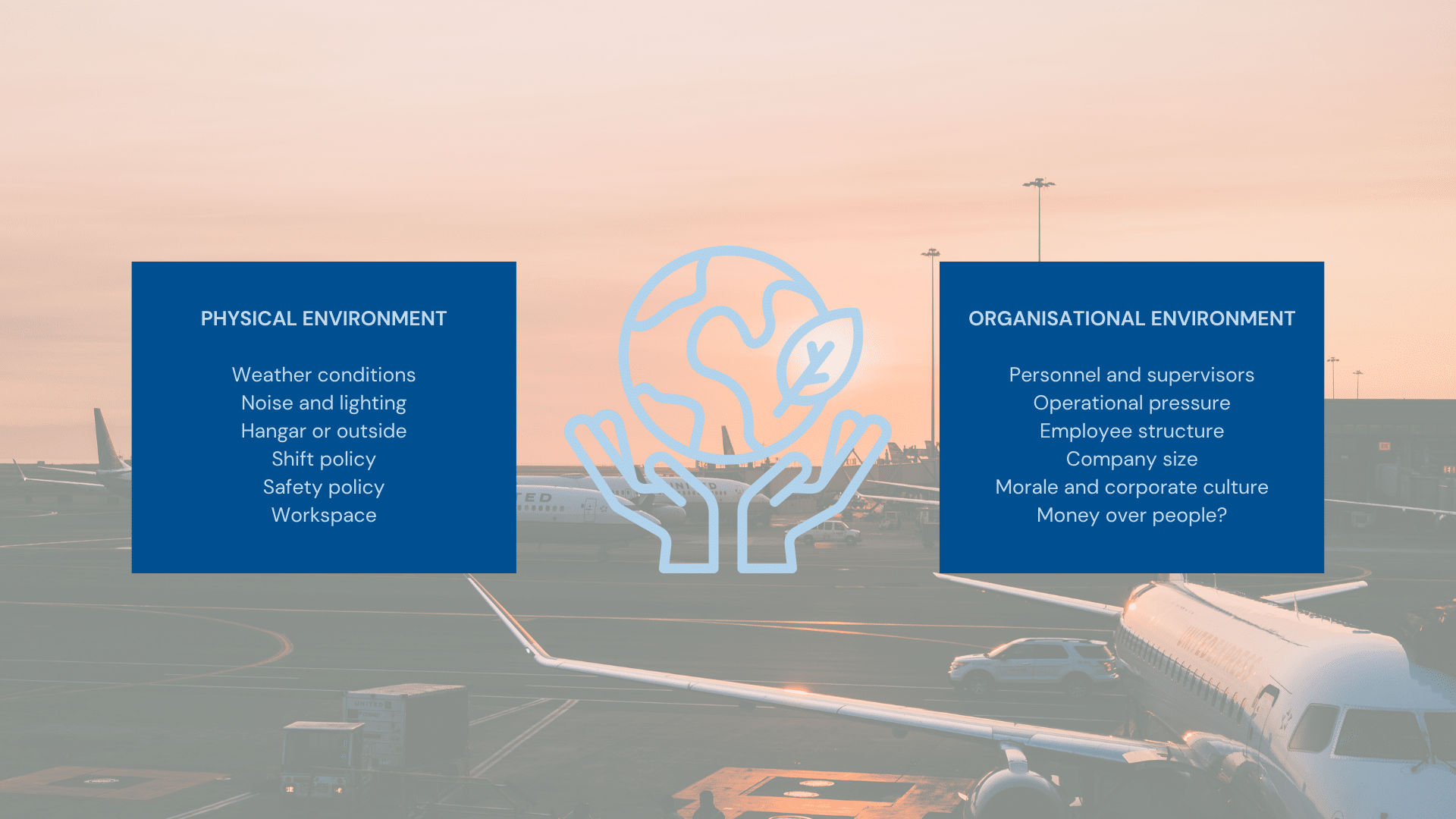
Every task is shaped by the environment in which it takes place. In aviation maintenance, there are at least two environments: physical and organisational.
The E in PEAR stands for Environment and constitutes an equally important element of the model. The operational reality in aviation is becoming increasingly complex, and technicians must deal with noisy hangars, interruptions, poor weather conditions, constant time pressure and other work-related challenges.
When identifying human factors issues in the daily operation and designing a comprehensive training programme accordingly, it is important to consider both the physical and organisational environment.
All Things Tangible
The physical environment consists of all the tangible elements in aviation maintenance. The ramp, the hangar, and the workshop are all part of the physical environment. But there is more to it.
What is the range of temperature? How is humidity, lighting, and noise levels controlled? Is the environment clean or dirty? And how is the workplace generally designed?
These environmental conditions influence the staff’s ability to concentrate, communicate, and perform the task at hand. Consistently and safely.
It is important that maintenance organisations acknowledge the physical environments present and encourage staff to share ideas, raise concerns, and provide feedback on the environment to ensure safe and efficient performance. There is, of course, an overlap between Environment and Resources in the PEAR model. It is obvious that you need resources such as air conditioning, sufficient lighting, proper workwear, and perhaps even external consultancy for the workplace design. The resources available deserve a separate focus in another article.
What remains is the organisational commitment to ensure a sustainable physical environment that supports safety and mitigates risk.
Read more: The P in PEAR: People and the Reality of Human Performance
Never Underestimate Organisational Factors
Aside from the tangible, physical environment, every company has a unique organisational environment. This environment is shaped and influenced by the size, personnel composition, legacy, and culture of the company.
How do we cooperate and communicate with each other? What are the shared values? And in what ways do we exercise mutual respect?
A healthy organisational environment fosters and promotes leadership, communicates openly and transparently, and incorporates shared goals and responsibilities. Corporate support and bottom-up feedback are essential to a strong organisational culture.
Environment Influences the Operation
The E in PEAR is ultimately about recognising that people do not perform independently from the environments in which they work. Physical surroundings, organisational culture, communication styles, and operational pressure all influence performance in different ways throughout the workday.
Therefore, the organisation should take steps to ensure that the environment supports a safe and efficient operation. The environment is nevertheless part of the operation itself.
Source of inspiration: Johnson, W. B. & Maddox, M. E. (2007). A Model to Explain Human Factors in Aviation Maintenance. SKYbrary Aviation Safety. Retrieved from: https://skybrary.aero/sites/default/files/bookshelf/1482.pdf