
The P in PEAR: People and the Reality of Human Performance
Aviation depends on highly trained, highly skilled pilots, cabin crew, and maintenance technicians operating in environments where performance and precision, even under significant operational pressure, is crucial to flight safety.
So, what happens when operational pressure meets human performance limitations?
It is quite simple. The people who perform the work, and thus human performance, is affected by many factors – physical, physiological, psychological, and psychosocial.
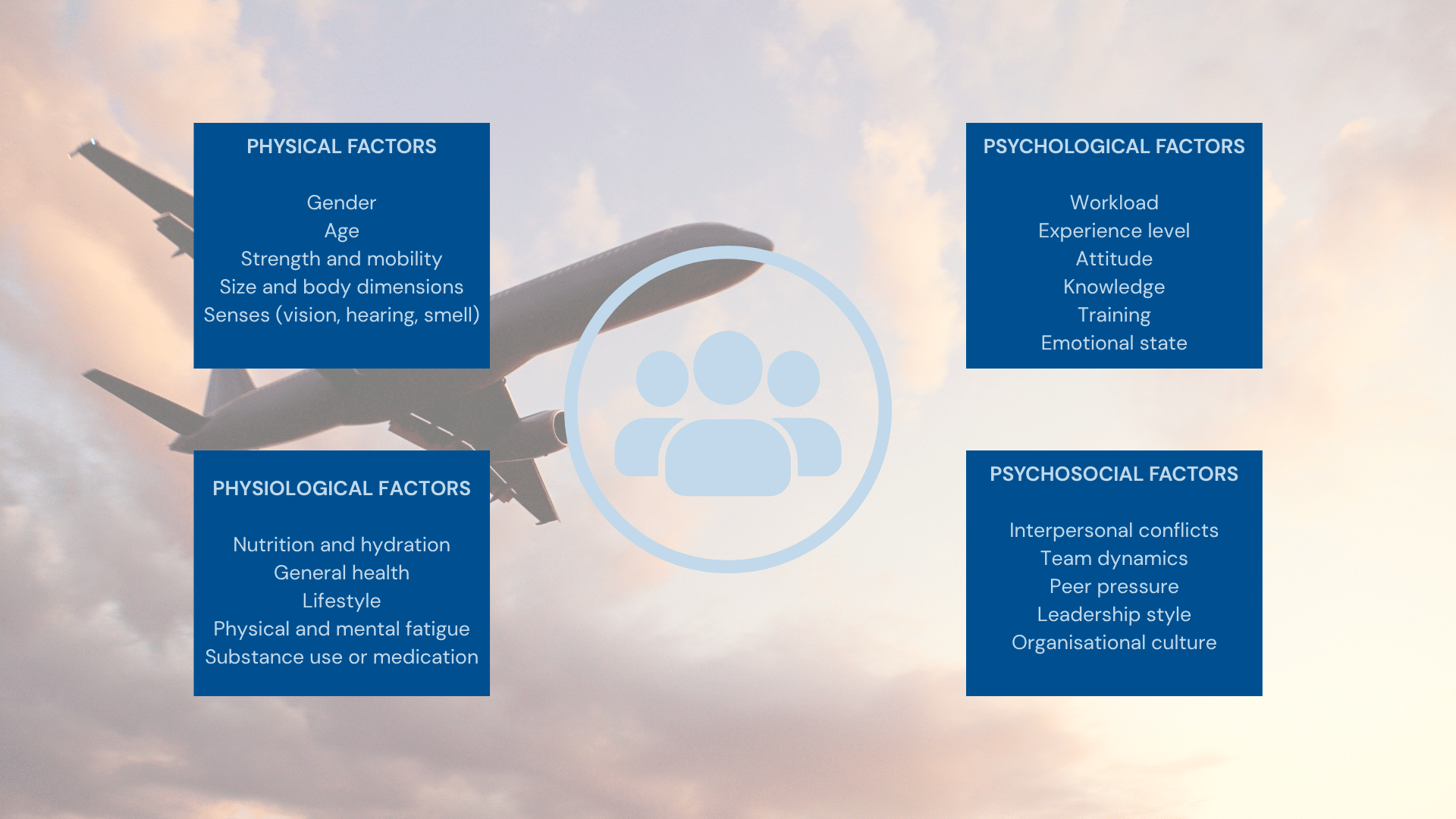
In other words, human performance is not constant. A fact which organisations must address when they design training programmes, write the procedures, and plan the daily work.
The P in PEAR stands for People. For organisations where safety and efficiency constitute the backbone of the operation, the people who do the job should always be a priority.
One Size Fits All?
One of the mistakes that organisations make when designing organisational systems is to treat everyone the same. But no pilot, cabin crew, or maintenance technician is the same size, has equal strength, or can endure the same amount of pressure.
In order to ensure that each person is physically capable of performing their job safely and efficiently, the organisation must consider physical factors such as age, gender, physical strength, and sensory limitations.
Human performance limitations are a natural part of the daily work. These natural limitations can organisations accommodate by introducing sufficient breaks, proper lighting, and differentiated tasks.
Small initiatives which can help ensure a healthy and safe workforce.
Body and Mind Alike
Physical limitations must obviously be considered. Equally important are the psychological factors which affect performance.
In recent years, mental health has rightfully received more attention, and many organisations prioritise health and fitness during the daily work. Introducing nutritious lunch options, making policies for smoking and alcohol use during working hours, and allowing physical activity during the workday can help reduce sick leave and increase productivity.
Organisations have a responsibility to help reduce physical and mental fatigue in their employees. A condition which is often present due to the demanding operational environment in which people work.
Scheduled breaks, proper workload management, and human factors training are all supportive initiatives when it comes to reducing fatigue and increasing performance.
Work as a Team, Communicate as a Team
A team’s endurance and ability to work together is a reflection of its members. Therefore, skills such as teamwork and communication are crucial to ensuring a safe and efficient operation.
Once again, the organisation can introduce measures to support high-performing teams. Human factors training is key to improving teamwork and communication. In addition, management should reward employees for speaking up about flaws in the system, for providing feedback and suggestions for improving the daily work, and for helping ensure safety.
The P in PEAR is ultimately about understanding human performance within the operational framework. People are constantly influenced by each other, themselves, and the environment in which they work.
In aviation, the people who perform the work are the gatekeepers of safe and efficient operations – and organisations must support them accordingly.
Source of inspiration: Johnson, W. B. & Maddox, M. E. (2007). A Model to Explain Human Factors in Aviation Maintenance. SKYbrary Aviation Safety. Retrieved from: https://skybrary.aero/sites/default/files/bookshelf/1482.pdf